Compression Bags for Travel vs Packing Cubes: Which Should You Sell?
Compression bags and packing cubes solve different problems. A compression bag collapses soft goods by forcing out air. A packing cube gives clothing a stable shape inside a suitcase. The right product for your catalog depends on how your customer travels, how often they unpack, and what they pack.
I work with both product types on the sewing line. The differences show up in zipper placement, seam tape, valve testing, fabric panel design, and the way the product fails after repeated use. This article explains those differences from a manufacturing and sourcing perspective.
What Each Product Actually Does
Compression Bags
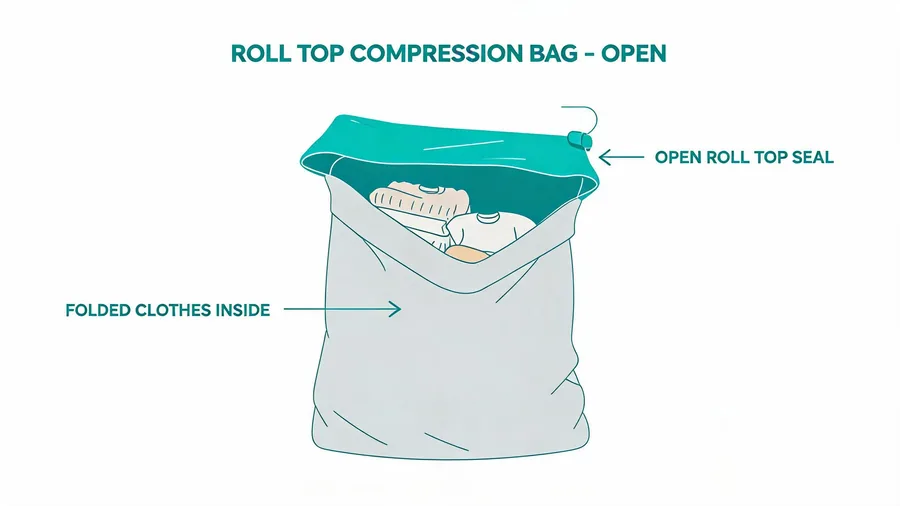
A compression bag is a flexible container designed to shrink around garments. Most designs use a roll-top closure or a vacuum valve. The user loads soft clothing, seals the opening, and pushes air out through a valve or rolled lip. The bag becomes flat and dense. On the factory floor, the critical parts are the valve seal, the seam tape, and the closure track. If the valve leaks, the bag re-inflates in the suitcase. If the seam tape peels, the bag loses compression. Our QC team checks those points before packing.
Packing Cubes
A standard packing cube is a fabric box with a zipper. It does not remove air. It groups rolled or folded clothes into a stable block. A compression packing cubes product adds a second zipper or compression panel that pulls the cube lid down after filling. That gives partial volume reduction while keeping structure.
Volume Reduction: Air Removal vs Structured Compression
Compression bags remove air from between fabric fibers. Roll-top bags force air through the opening by squeezing. Vacuum bags use a valve and pump or vacuum cleaner. The result is very flat. Packing cubes fill empty corners in a suitcase but do not compress the clothes themselves.
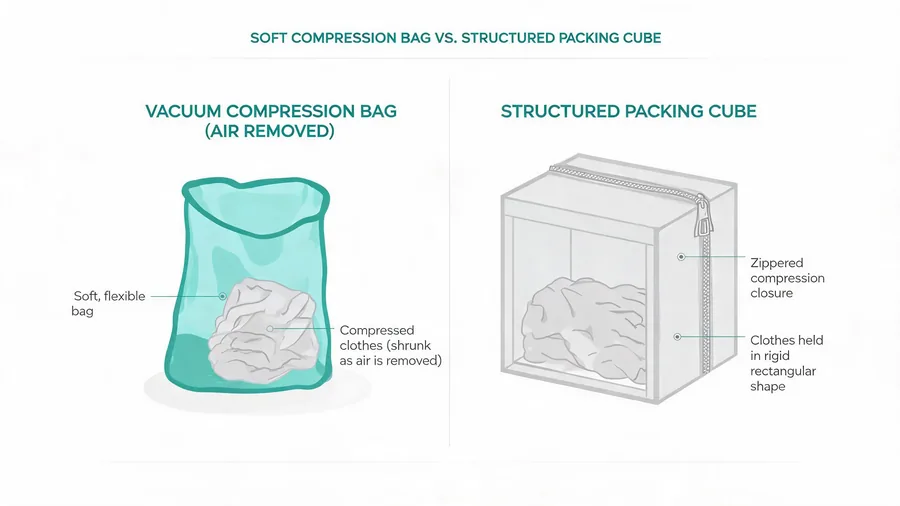
Compression packing cubes sit between the two. The second zipper compresses clothes by pulling the top panel down, but the garment fibers still keep some air. The result is a thinner cube, not a hard vacuum pack. For travel-specific air removal designs, see vacuum packing cubes.
Production Example: A-4618 Set
A current production set gives you a reference for sizing. The A-4618 set uses nylon and two-way YKK zippers. The four sizes cover suitcases, duffels, and carry-on layouts.
| Size | Dimensions |
|---|---|
| XL | 16.5" x 12.6" x 4.7" |
| L | 13.5" x 11.5" x 4.7" |
| M | 12.6" x 9.5" x 4.7" |
| S | 11.5" x 8.4" x 4.2" |
This four-size family shows how depth stays close across sizes while length and width scale down. That keeps retail photography consistent and makes the set feel like one system.
Durability and Reuse Differences
Compression bags made from film are lighter and often have a more disposable hand feel. They can form pinholes, cracked valve stems, or worn roll closures. A small hole in film can stop compression. Fabric packing cubes using ripstop nylon or polyester hold up better under repeated zipper cycles. The mesh top can tear if overloaded, but damage is usually visible earlier.
In QC, we test zipper pulls, seam strength, and valve backflow. For compression bags, the valve is the first failure point. For packing cubes, the zipper track and corner stitching are the first failure points. A compression cube shares the packing cube failure points, but the compression zipper adds one more area to inspect.
Wrinkling and Garment Care
Strong compression bags create hard creases. Dress shirts, linen, and structured jackets come out flat and pressed in the wrong way. Packing cubes allow rolled clothes to keep more loft, but they do not press garments. A compression packing cube can crease less than a vacuum bag because compression is limited by panel tension. For customers who pack business clothes, standard cubes with careful folding are safer. For bulky and casual layers, compression bags work well.
Airport and Unpacking Experience
Compression bags can make a suitcase look dense on a scanner. If security opens one, repacking takes effort. At a hotel, vacuum bags may need a vacuum pump or handheld pump. Roll-top bags can be re-rolled without equipment, but the result is rarely as flat as the first pack.
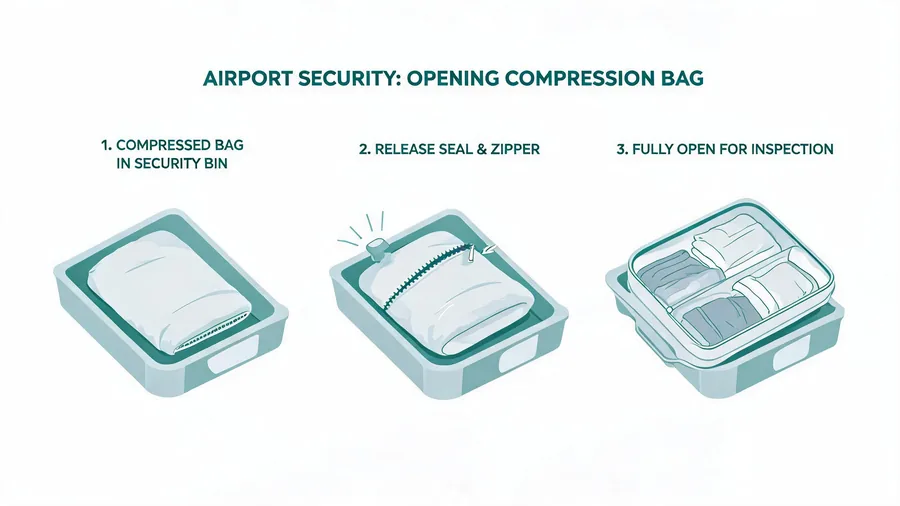
Packing cubes make inspection easier. Contents stay in separate blocks, and a security check does not destroy your packing system. Compression packing cubes keep this advantage. You can unzip the compression zipper, pull out one shirt, and zip it back down. The rest of the cube stays tidy.
Which Customer Segments Prefer Each
- Compression bags: budget backpackers, families packing bulky jackets, long-stay travelers, outdoor users who need to fit down insulation or sleeping layers.
- Standard packing cubes: business travelers, organized frequent fliers, customers who unpack into dressers, and anyone who values visual order.
- Compression packing cubes: travelers who want both structure and moderate space savings, often premium travel buyers and online sellers who can explain a two-zipper design.
Hybrid Designs as the Middle Ground
The hybrid is usually a fabric cube with an inner divider or a second zipper that compresses the top. We build these with ripstop nylon panels, mesh windows, and a compression zipper around the body. The customer fills the cube, closes the main zipper, then pulls the compression zipper to reduce height. The result is not as flat as a vacuum bag, but it keeps the cube shape and protects zippers from high pressure.
Read our compression packing cube engineering guide for more on panel tension, zipper placement, and fabric choice. The engineering choices affect how much compression a cube can hold and how long the zipper lasts.
Comparison Table
| Feature | Compression Bags | Standard Packing Cubes | Compression Packing Cubes |
|---|---|---|---|
| Air removal method | Roll closure or vacuum valve | None, organization only | Second zipper or compression panel |
| Durability | Film can puncture or leak | Strong fabric body | Strong fabric body with extra zipper |
| Wrinkling | High when fully compressed | Lower than vacuum bags | Moderate |
| Unpacking | Can be lumpy and dense | Easy access, stable blocks | Easy access, moderate compression |
| Best customer | Budget, family, outdoor, long stay | Business, frequent, organized | Premium traveler, space saver, gift buyer |
Which Should You Launch First?
If your catalog is new, start with standard packing cubes. They have fewer failure points, simpler QC, and stronger repeat purchase behavior. Compression bags can be added as a space-saving accessory once you have customer feedback. If your audience is outdoor or budget family travel, compression bags may be the better first product because the use case is clear and the value is obvious in product photos.
Compression packing cubes are best for brands that already sell luggage or have content that can demonstrate the two-zipper system. They need more explanation than a standard cube, but they command a stronger position in a crowded travel accessory market.
Requesting a Quote for Your First Run
When you contact our team, include target dimensions, fabric preference, zipper type, and whether you want a standard cube, compression bag, or hybrid design. If you are not sure, send a reference product or a rough set of sizes. We will walk through material options, construction details, and the tradeoffs from the sewing line. MOQs depend on fabric and construction, contact the factory.
Put this into production
We build custom packing cubes from spec sheets exactly like the ones described above. Send yours and we reply within 24 hours.
Get a Quote